The cue tip is the small leather cap on the end of your cue. It is the only part that touches the ball, it is the cheapest part of your cue, and it is the first to wear out. Even so, it usually only gets replaced once the game has been off for a while.
I get that question on the phone a lot: how do I tell that it is worn? Below is what I look at myself when someone brings a cue in.
Five things you can see for yourself
1. You miscue more often, and always in the same way
A worn tip grips less. You notice it first with side: the ball does not quite do what you asked, and on a hard shot the cue slides off. Someone who thinks his game has got worse is sometimes just playing on a tip that is finished.
2. The top is flat
A tip should be domed, roughly the curve of a coin. Once it wears flat it meets the ball across a wider area and you lose control. You can file it back for a while, but each time it gets lower.
3. It is wider than the ferrule
If the edge of the leather grows wider than the white below it, the tip has spread. That is called mushrooming, and it is the clearest sign that it has been played on too long.
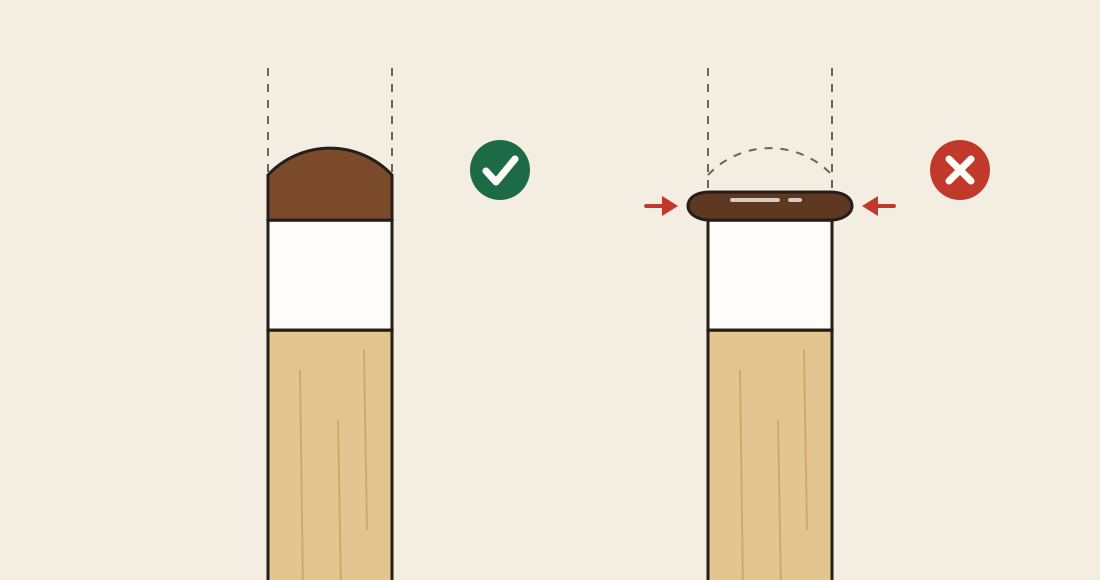
4. It is shiny
Leather that has gone smooth and glossy no longer holds chalk. A tip you cannot get rough again is worn, not dirty.
5. It is loose, or there is a ridge
If you can feel a ridge between the leather and the ferrule with your fingernail, the glue is letting go. Then it is only a matter of time before it comes off, usually in the middle of a frame.
Layered or single-piece?
A single-piece leather tip is cheaper and softer; it spreads sooner and needs shaping more often. A layered tip is made of pressed layers, holds its shape longer and plays more predictably. For anyone playing competition, that is the difference that counts.
There is also hard, medium and soft. Harder gives more control and less side, softer the other way round. There is no best choice: there is the one that suits the way you play, and we go through that when you come by. You can see which types I sell under cue tips in my shop.
What matters when replacing it
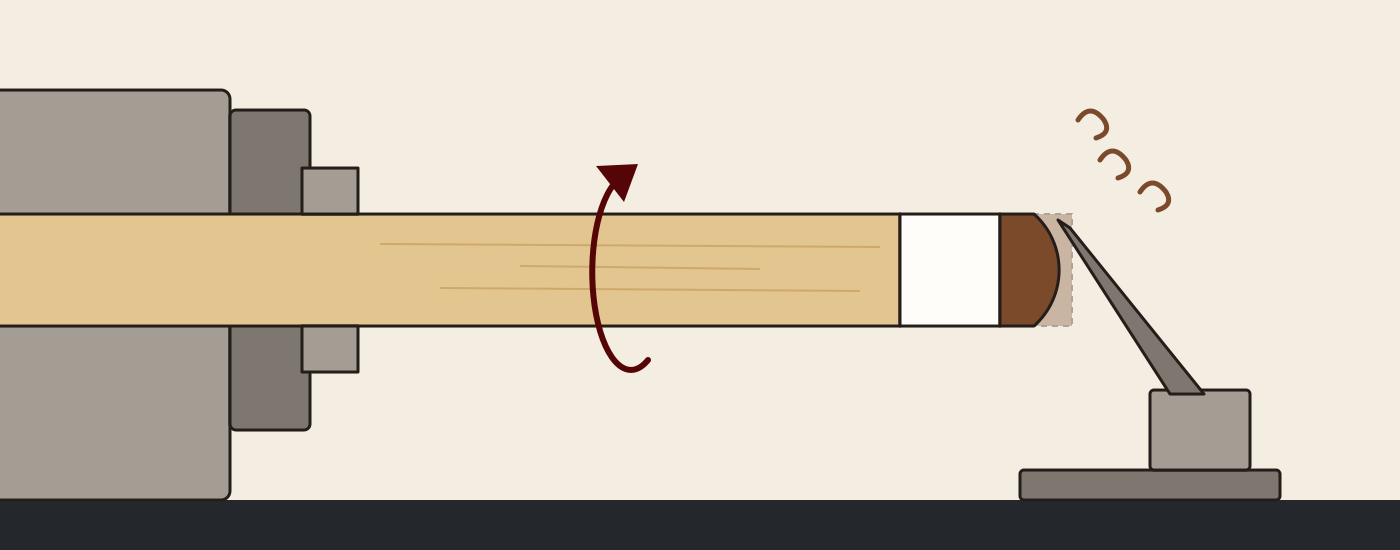
The new tip has to fit the ferrule exactly. Too wide and it is trimmed back until it runs flush; too narrow and the edge of the ferrule wears with it. The world federation's rules set one hard limit on the cue itself: the tip may be no more than 14 mm.
Beyond that it is the glueing that decides. The old leather off, the face squared, glued under pressure and only then shaped. Turn that order around and you get a tip that looks right and comes loose after two weeks.
Do it yourself or have it done?
Replacing a tip can be done yourself. What you need is a flat surface, the right glue, patience while it dries and a steady hand when shaping it. When it goes wrong, the damage is usually not in the leather but in the ferrule underneath, and that is a dearer repair than the one you started with.
If you would rather drop it off, I will do it for you — together with the rest of the cue if it is due for a going-over anyway.
Want your cue looked after? The page below explains what I do, what I need from you and how to get the cue to me.